
What Is High-Functioning Anxiety? Signs You Might Be Masking It
Oct 06, 2026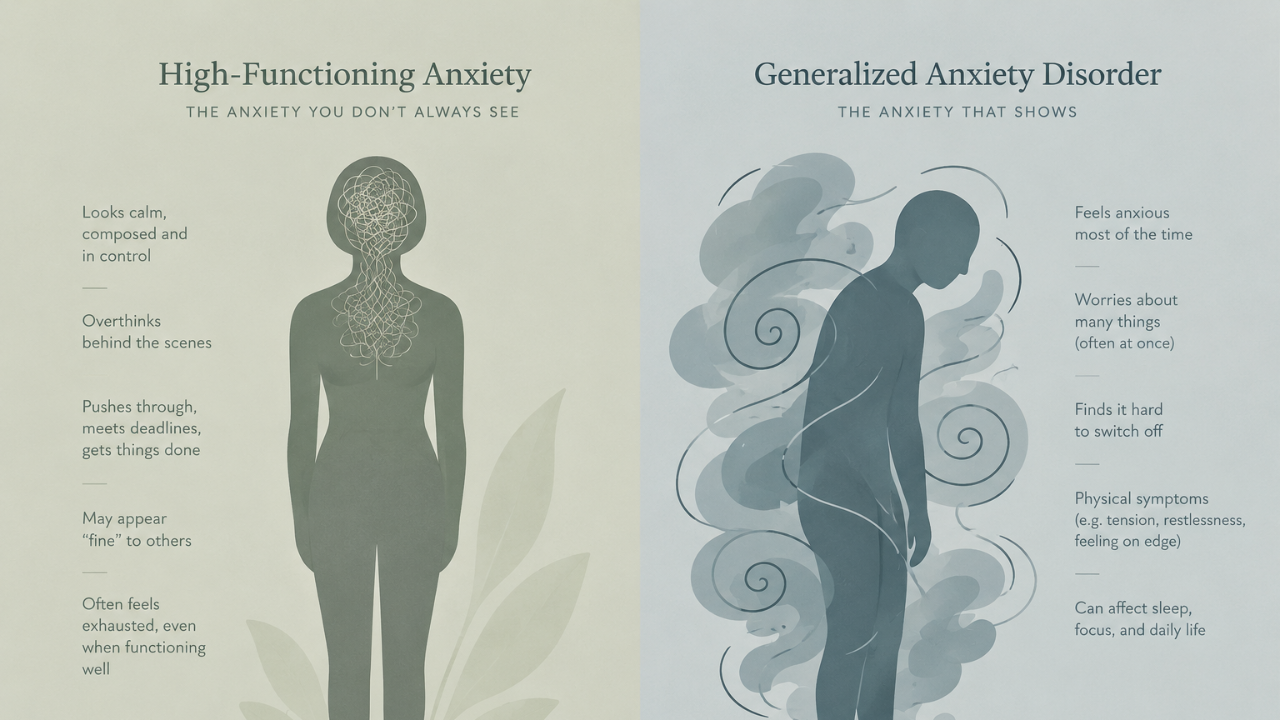
High-functioning anxiety is more common than most people realize and it is often invisible, even to the people living with it. From the outside, you look like you have it all together. You show up on time, meet your deadlines, and check every box on your to-do list. But underneath it, your mind rarely slows down. You replay conversations, overthink small decisions, and feel a quiet, constant pressure to keep performing; even when no one's asking you to.
This is what high-functioning anxiety often looks like. It doesn't always show up as visible panic or breakdowns. More often, it hides behind productivity, achievement, and a calm exterior which is exactly why it's so easy to miss.
High-functioning anxiety often goes unnoticed because it doesn't stop you from performing, it rarely gets flagged as a problem by others, or by yourself. You're "doing fine," so it's easy to dismiss the constant tension, racing thoughts, or exhaustion as just how you are, rather than something you're actually struggling with.
What High-Functioning Anxiety Actually Is
High-functioning anxiety isn't an official clinical diagnosis, but it's a term many therapists use to describe people who experience real, persistent anxiety while still managing to function well on the outside — at work, in relationships, in daily responsibilities. The anxiety is there, it's just working quietly in the background, often mistaken for ambition or "just being a perfectionist."
It's worth noting that High-Functioning Anxiety is different from Generalized Anxiety Disorder (GAD) which is a recognized clinical condition. GAD often disrupts daily functioning in visible ways — missed work, avoidance, physical symptoms that interfere with routine. High-functioning anxiety, on the other hand, coexists with high performance. You're still "functioning" — sometimes excelling — while carrying the same internal weight. That's part of what makes it harder to recognize and easier to dismiss, in yourself and by others.
What Causes High-Functioning Anxiety
There's rarely one single cause. It often develops from a mix of personality traits (like conscientiousness or perfectionism), early experiences where achievement was tied to approval or safety, and environments like school, work or family that rewarded constant output over rest. Over time, staying "on" becomes both a coping mechanism and a habit that's hard to name, let alone unlearn.
Signs You Might Be Living With High-Functioning Anxiety
Overachieving as a coping mechanism
You set high standards for yourself, not just because you want to do well, but because succeeding is one of the few things that quiets the anxious noise in your head. Achievement doesn't feel like joy so much as relief; a temporary escape from the pressure you're carrying.
Difficulty relaxing
Even when you finally have free time, you can't fully settle into it. Rest feels unproductive, or even guilt-inducing, so you fill downtime with more tasks, more planning, more "useful" activity or anything to avoid sitting still with your thoughts.
Constant busyness
Your schedule is packed, and part of you likes it that way. Staying busy keeps your mind occupied, which means less space for the anxious thoughts to surface. The moment things slow down, the anxiety often gets louder, not quieter.
Fear of failure or disappointing others
You overprepare for things that don't need that much preparation. You say yes to more than you can comfortably handle, because saying no feels risky, like it might disappoint someone or make you look like you can't manage. The fear of falling short drives a lot of your decisions, even when it's not obvious to anyone watching.
People-pleasing
You read the room constantly, adjusting your tone, your opinions, even your needs, to avoid conflict or tension. Keeping others comfortable often takes priority over your own comfort, even when it means quietly overextending yourself.
How to Start Managing High-Functioning Anxiety
You don't need a crisis to justify addressing this. A few starting points:
- Notice when busyness is being used to avoid stillness, rather than genuine necessity
- Practice sitting with unstructured time, even in small amounts, without immediately filling it
- Get curious about the thoughts behind your "yes". Are you saying yes because you want to, or because saying no feels unsafe?
- Talk to a therapist who can help you unpack where the anxiety originated and build healthier patterns around rest and achievement
When to Seek Support
If being "fine" on the outside is costing you peace on the inside, that's reason enough to reach out for support. You don't have to wait for a crisis or burnout to justify getting help. Therapy can help you understand where the anxiety comes from and build a healthier relationship with rest, achievement, and yourself.
You don't have to keep holding it all together alone. Book a free consultation with Cornerstone Therapy and Consultancy
If unhelpful thought patterns feel familiar too, our post on How To Challenge Unhelpful Thoughts goes deeper into reframing the kind of thinking that often fuels this cycle.
When You Need More Than a Technique
If certain thoughts keep circling back no matter how many times you challenge them, that's usually a sign they're tied to something deeper: an old experience, a long-held belief about yourself, or a pattern that started long before the situation in front of you today. That kind of work is hard to do fully alone, and it's exactly what therapy is for.
If this sounds like where you are right now, we'd be glad to help you work through it.
Stay connected with news and updates!
Join our mailing list to receive the latest news and updates from our team.
Don't worry, your information will not be shared.
We hate SPAM. We will never sell your information, for any reason.